Live Dental Webinars
(Showing Next 5 Upcoming)
|
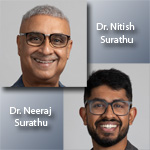
 Digital Implant Surgery: How 3D Printing changes the Guided Surgery Workflow Digital Implant Surgery: How 3D Printing changes the Guided Surgery Workflow
Presenter: Dr. Nitish Surathu and Dr. Neeraj Surathu
Sponsor: Rapid Shape
| Tue |
10/27/26 |
7:00 PM ET
4:00 PM PT
|
| Tue |
10/27/26 |
11:00 PM UTC
|
|
CE Credits: 1 Interactive CEU
|
|
This CE webinar explores how 3D printing is transforming the digital workflow for guided implant surgery, from treatment planning through surgical guide fabrication and implant placement. Participants will learn how to integrate CBCT and intraoral scan data, evaluate implant planning software, and develop predictable treatment plans using digital technology. The webinar will also cover the design, 3D printing, and post-processing of surgical guides and restorations, with a focus on applying guided surgery protocols to improve implant accuracy, efficiency, and patient outcomes.

|
From Inspection to Resolution 2026: Real Cases of How Dental Practices Navigated OSHA Investigations
Presenter: Dr. Karson Carpenter
Sponsor: Compliance Training Partners
| Wed |
10/28/26 |
7:00 PM ET
4:00 PM PT
|
| Wed |
10/28/26 |
11:00 PM UTC
|
|
CE Credits: 1 Interactive CEU
|
|
In this one-hour CE webinar, Dr. Karson Carpenter, president of Compliance Training Partners, will review actual OSHA inspection cases that he and his technical team have been involved with in the last 12 months. The webinar will show actual citations and how the inspection progressed from notification of inspection to onsite visit, receipt of fine, and resolution.

|
Digital Workflows for Predictable Adult Orthodontic-Restorative Treatment Implementing a Digital Ecosystem
Presenter: Dr. Melissa Shotell
Sponsor: ClearCorrect
| Thu |
10/29/26 |
7:00 PM ET
4:00 PM PT
|
| Thu |
10/29/26 |
11:00 PM UTC
|
|
CE Credits: 1 Interactive CEU
|
|
Adult patients are the largest growing population seeking orthodontic treatment. Many adult patients seek clear aligners as an esthetic alternative to traditional bracket and wire treatment. Yet many adult patients present with complex restorative treatment needs that can be complimented by orthodontic treatment for improved clinical outcomes with interdisciplinary treatment plans. Adult patients require a different patient experience and seek convenient and efficient treatment. The course will cover the basics of aligner design, materials, and mechanical advantages to understand the importance of product selection in complex adult treatment plans. The CE webinar will also explore the digital workflow and digital ecosystem for office efficiency and optimal patient experience. After the webinar, the attendee should be able to evaluate and select an aligner system for complex interdisciplinary cases, and evaluate how to implement a digital workflow for enhanced treatment planning and patient experience.

|
Smarter Smile Design: Align, Whiten, and Restore
Presenter: Dr. Nicholas Garcia
Sponsor: uLab Systems
| Mon |
11/2/26 |
7:00 PM ET
4:00 PM PT
|
| Tue |
11/3/26 |
0:00 AM UTC
|
|
CE Credits: 1 Interactive CEU
|
|
In this CE webinar, join Dr. Nicholas Garcia for a practical discussion on integrating clear aligners into everyday esthetic dentistry - particularly for patients considering whitening, veneers, or other cosmetic improvements. Using a scan-first approach, Dr. Garcia will demonstrate how he evaluates tooth position, spacing, and occlusion before developing a treatment plan. Attendees will learn how to determine when to align, when to restore, and when combining treatments may create a more conservative and predictable path to the desired esthetic outcome. The webinar will provide a straightforward framework for recognizing anterior esthetic aligner opportunities, sequencing complementary services, and confidently presenting comprehensive treatment options to patients.

|
Oral Cancer Screening: It’s More Than Grasping the Tongue
Presenter: Susan Cotten, BSDH, RDH, OMT
Sponsor: VOCO America
| Tue |
11/3/26 |
7:00 PM ET
4:00 PM PT
|
| Wed |
11/4/26 |
0:00 AM UTC
|
|
CE Credits: 1 Interactive CEU
|
|
Both dental hygienists and dentists play an important role in the early detection of oral cancer, yet there is a critical gap in screening protocols. After performing an oral cancer screening, patients often say, "No one has ever done that before." This CE webinar breaks down the components of a comprehensive visual and tactile, extraoral, and intraoral evaluation, and the signs and symptoms associated with oral and oropharyngeal cancer as an important component in screening. Using Susan’s instructional screening videos and case presentations, attendees will learn proper extraoral palpation, the importance of identifying lymphadenopathy, evaluation of the thyroid gland, and the oropharynx. ADA and ADHA oral cancer policies and coding will be reviewed.
A comprehensive oral cancer screening isn’t optional. Let’s close the gap together, elevate the standard of care in screening, calibrate dental professionals nationwide, and increase early detection. Attendees will leave inspired and with a renewed commitment to performing this life-saving evaluation – every patient, every visit.
Featured On-Demand CE Webinars
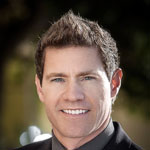
Veneer longevity is determined by what we bond to and how teeth are prepared - long before cementation begins. This focused CE webinar presents a mock-up–driven veneer workflow, demonstrating how diagnostic planning and preparation design create optimal bonding conditions for predictable esthetics and long-term success. Attendees will gain a clinically practical framework for making bonding and preparation decisions that directly influence veneer performance and durability.
Improvement in materials and technologies make it possible for all dentists to expand on direct restorative services they provide for their patients and improve indirect restorative workflows for difficult aesthetic cases. This CE webinar will discuss the fusion of digital and analog workflows to enhance predictability and patient satisfaction. Step-by-step case review will highlight the individual procedural elements to improve aesthetic and functional outcomes of your most challenging cases.
Cementation is the final, decisive step that determines whether an otherwise excellent indirect restoration succeeds or fails, yet it's often where protocols become inconsistent, rushed, or based on habit rather than the specific material in hand. With the range of restorative materials in use today (zirconia, lithium disilicate and other glass-ceramics), no single cement or surface-treatment protocol applies to every case. This CE webinar takes a substrate-driven approach: matching the cement category and preparation steps to the restorative material, the clinical situation, and the amount of retention available.
Through a step-by-step walkthrough of the cementation workflow, this CE webinar covers cement selection, intaglio surface treatment, the role of primers and silane coupling agents, isolation and contamination control, try-in and cleaning, seating, and finishing. The goal is to give clinicians a clear decision framework they can apply chairside to improve predictability, reduce post-operative sensitivity and debonding, and streamline what is often an unnecessarily complicated part of restorative dentistry.
Featured Podcast Episodes
 Series: Bisco
CE Credits: 0.5
Series: Bisco
CE Credits: 0.5
Guest: Dr. Gary Radz
|
In this episode, Dr. Gary Radz shares his proven workflow for creating predictable, highly esthetic porcelain veneers—from diagnostic wax-ups and lifelike temporaries to try-in protocols, isolation, bonding, and cement selection that removes the guesswork from veneer delivery. Dr. Radz also explains why the case isn't over once the veneers are seated. He discusses the importance of the post-insertion visit. If you do veneers, you won't want to miss this episode. A lot on workflow!
 Series: VOCO America
CE Credits: 0.5
Series: VOCO America
CE Credits: 0.5
Guest: Dr. Ryan Walsh
|
This episode addresses how MTA—mineral trioxide aggregate—can be used as both an indirect and direct pulp cap and is ideal for perforations. MTA isn’t just an endodontist's material—it’s very much a general dentist’s material as well. Especially now, as more of us focus on minimally invasive dentistry and are doing everything we can to preserve the natural tooth. Our guest is Dr. Ryan Walsh, who maintains a full time private practice in Keller, TX. He is a Diplomate of the American Board of Endodontics (ABE) and serves on the Scientific Advisory Board of the Journal of Endodontics. Dr. Walsh maintains an appointment as Adjunct Assistant Professor at Texas A&M College of Dentistry and is actively involved in clinical research pertaining to bioactive materials, resorption processes, and clinical outcomes. He has lectured nationally and internationally on several topics in his specialty and has published multiple peer-reviewed articles and abstracts.
Series: VOCO America
CE Credits: 0.5
Guest: Dr. Avi Patel
|
In this episode, we take a real-world, no-hype look at what it actually takes for general dentists to succeed with aligners. We talk about why our guest first brought clear aligner therapy into his practice, the game-changing role of mentorship, common mistakes that can derail cases, and practical clinical pearls—especially when it comes to attachments and case selection. Our guest is Dr. Avi Patel, general dentist and founder of Clear Aligner Advisor. He’s helped hundreds of dentists successfully integrate aligner therapy into their practices through hands-on training, mentorship, and real-world implementation support. Dr. Patel can be reached at https://www.clearaligneradvisor.co/








 A Mock-Up–Driven Approach to Veneer Preparation and Bonding